Cheap Web Hosting for Small Business: 10 Plans That Last
By the ReportDoor deskUpdated November 28, 202616 min read
In short
Compare 10 cheap web hosting for small business plans on introductory price, renewal rate, term and limits. Independent comparison with dated vendor pricing.

Which cheap hosting plan is still cheap in year two?
The banner price answers a question nobody asked. What a small business pays is set by three things the sign-up page tends to bury: the term attached to the low rate, the renewal figure printed on the vendor's own price page, and the caps the base tier puts on sites and storage.
Demand for those entry tiers isn't in doubt. In the UK Business Data Survey 2024, 68% of all businesses reported having a website, and adoption ran from 65% among sole traders to 93% among small businesses and 97% among medium-sized firms (UK Business Data Survey 2024). The smallest operators hold the least budget for infrastructure, which is exactly why a low monthly plan becomes their operating expense.
The ten entries below run from single-site entry tiers to plans that bundle email, a domain and migration help. Each is judged on the year two bill rather than the launch discount. Prices are the vendors' published quotations, checked on 12 January 2026, not the results of hands-on testing, and they change.
Table of Contents
- 1. Hostinger
- 2. Namecheap
- 3. IONOS
- 4. DreamHost
- 5. InMotion Hosting
- 6. GreenGeeks
- 7. Bluehost
- 8. HostGator
- 9. SiteGround
- 10. GoDaddy
- Introductory price, renewal rate and plan limits side by side
- How to Read a Hosting Quote Before You Pay
1. Hostinger
The vendor's own sale page is the only place the entry rate is guaranteed to apply, and the terms underneath it decide the actual cost. 
Hostinger runs four product lines: shared, WordPress, cloud and VPS hosting. A solo business can start on a shared tier, use the bundled site builder or one-click WordPress installer, and move to cloud or VPS capacity later without opening a second account. Higher tiers allow more than one site, which matters when the plan has to cover a main site plus a landing page.
Why Shared Tiers Exist At All
Industry figures reported for 2018 put the global web-hosting market at $90.6 billion, with shared hosting at 31.7% of it and projected annual growth of 10.3% for shared plans against 5.6% for dedicated servers (web hosting statistics). Sharing hardware and operating costs across many accounts is what lets a provider post a monthly rate a one-person business can carry.
- Check the term: the lowest advertised rate typically requires a multi-year commitment paid upfront.
- Check the renewal: renewal pricing can be substantially higher than the introductory figure.
- Check the tier caps: site count, storage and backup frequency change as you move down the range.
For a wider view of what small firms spend on software each year, ReportDoor's small business software statistics collect sourced figures on the category.
2. Namecheap
Namecheap publishes both numbers on the same table, which already puts it ahead of hosts that show only the promotional rate. Shared hosting runs on cPanel across three tiers: Stellar at $2.28 per month introductory and $5.88 on renewal, Stellar Plus at $2.98 and $7.88, and Stellar Business at $4.98 and $11.88, as listed on the Namecheap shared hosting page checked on 12 January 2026.
The pricing table is where the comparison starts rather than ends. 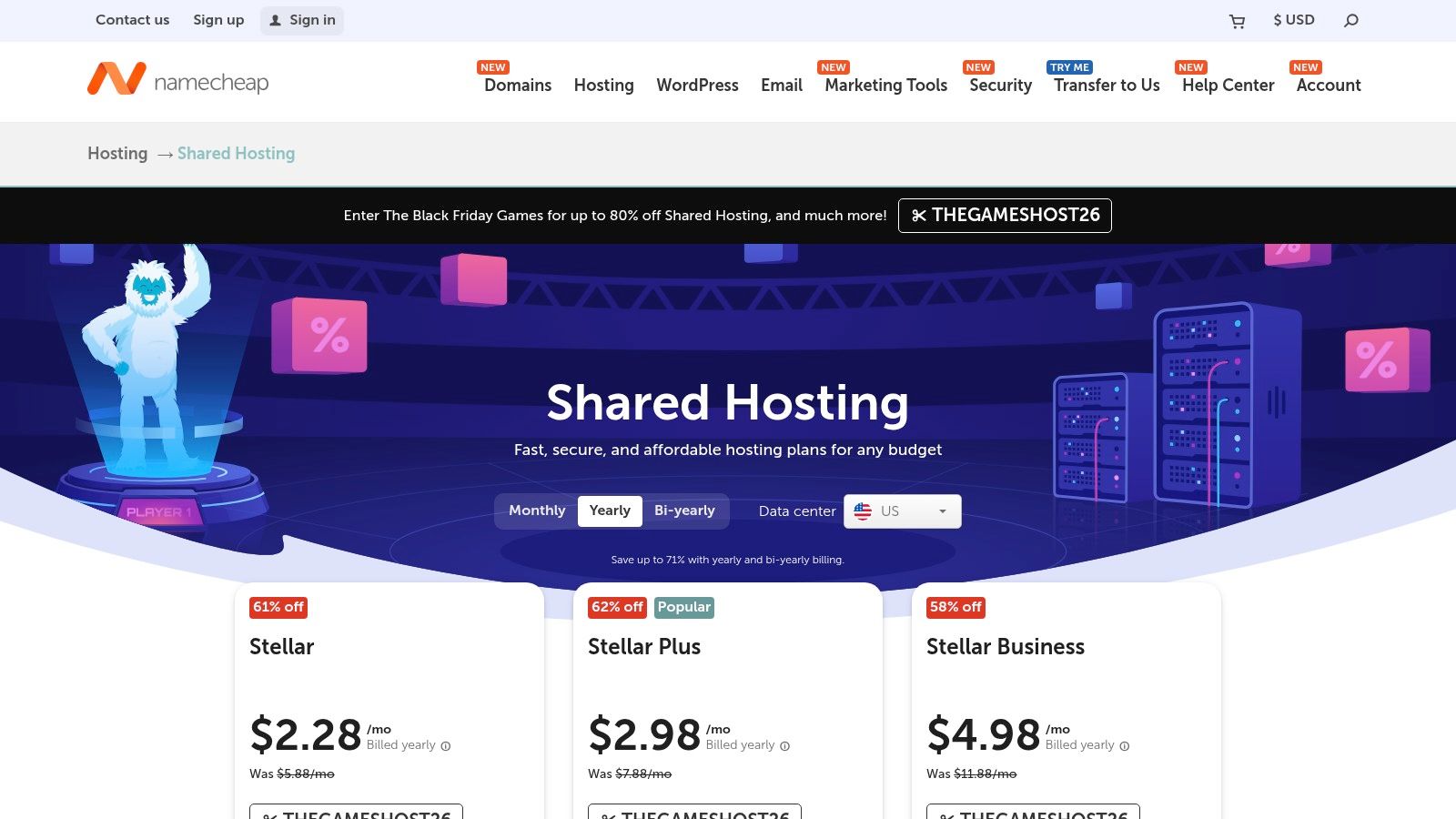
The Domain Runs On Its Own Clock
Most Namecheap customers arrive already holding domains, which is both the convenience and the trap. A hosting bundle doesn't reset the renewal calendar. ICANN requires registrars to send two renewal reminders, roughly one month and one week before expiry, and a registrar may not refuse a transfer solely because a domain has expired, though a domain in the Redemption Grace Period must be restored by the current registrar first (ICANN domain renewal and expiration FAQs).
Entry tiers cap websites and storage, and shared hosting is a poor fit for a resource-hungry store. For a brochure site or a contact-form business page, the arithmetic is simple: take the renewal rate, multiply by twelve, and compare that annual figure against the tier above it.
3. IONOS
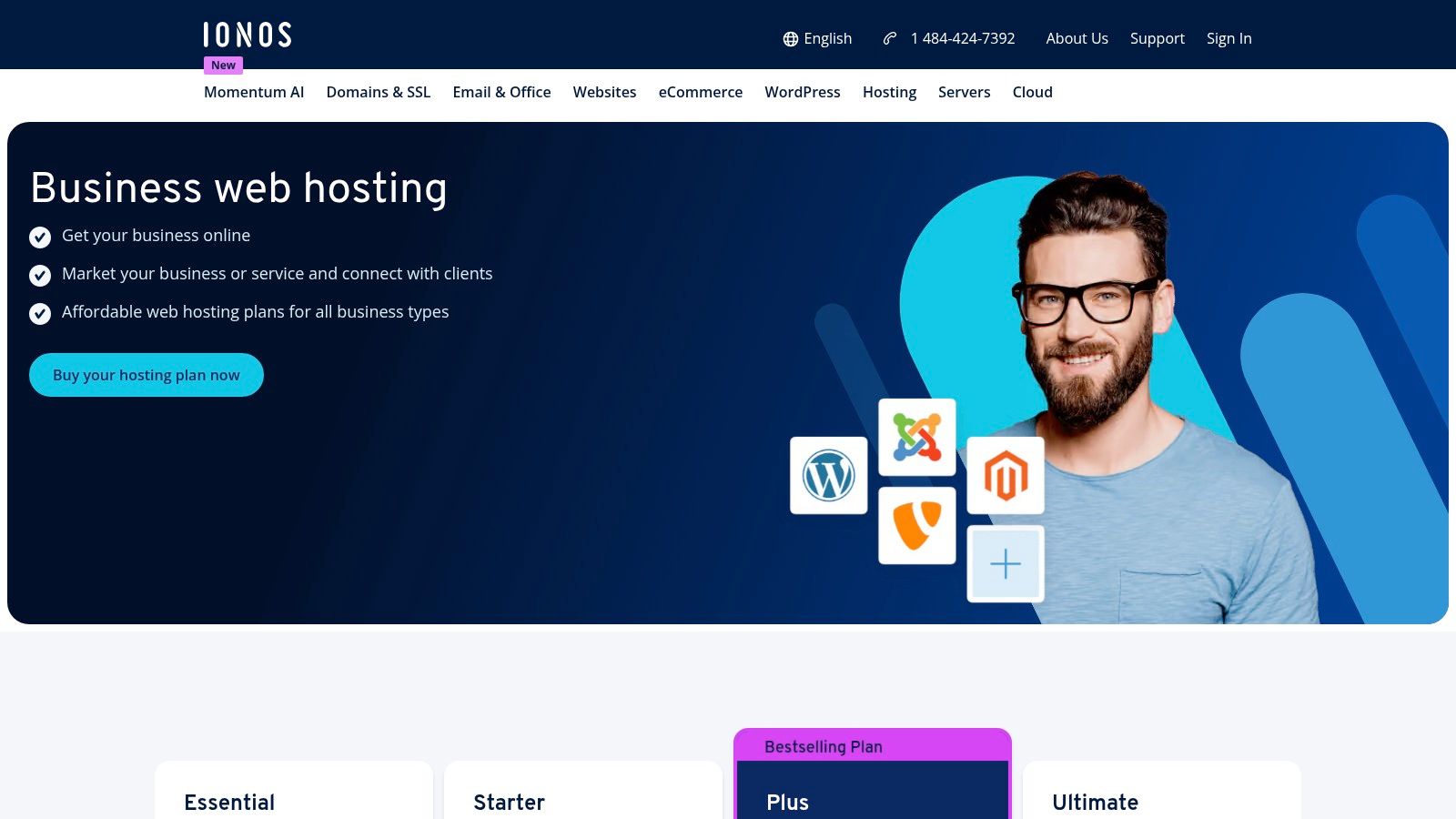
A one-dollar headline rate deserves suspicion, and IONOS builds its pricing on exactly that kind of offer. The featured one-year plan is listed at $1 per month and renews at $14, with other plans at $4 renewing at $8 and $6 renewing at $10, according to the IONOS business hosting page checked on 12 January 2026. The gap between the featured rate and the renewal rate is the widest on this list, which makes the year two bill the actual price of the plan.
What sits inside the plan is the reason to consider it at all. Business hosting includes NVMe storage, professional email and malware scanning on listed plans, plus WordPress and other application installs. Bundled email matters here because a mailbox bought separately elsewhere adds its own monthly line to the hosting bill. Higher tiers add resources and CDN features, so the base tier is a starting point rather than a destination: a site that outgrows it moves up and pays the higher tier's renewal rate too.
The one-dollar trap: a plan that multiplies fourteenfold at renewal is a one-year trial, not a budget line. Budget the renewal rate from month one and the offer stops being a bargain you regret.
Buyers say price is what they weigh first. In independent survey data, 72% of small-business respondents named price as the leading hosting-selection criterion, ahead of ease of use at 45% and speed at 34%, and 72% also reported managing hosting themselves (web hosting statistics from All About Cookies).
Self-management raises the value of what IONOS bundles. A team running its own hosting has no administrator to configure mail or scan for malware, so each feature included in the base tier is one less evening of setup and one less separate subscription. Entry plans across the market can be priced this low because the wider infrastructure behind them keeps getting cheaper, a trend visible in cloud computing statistics on the infrastructure market these plans sit inside. The IONOS question is narrower: whether the features bundled at $1 still justify the plan at $14.
4. DreamHost
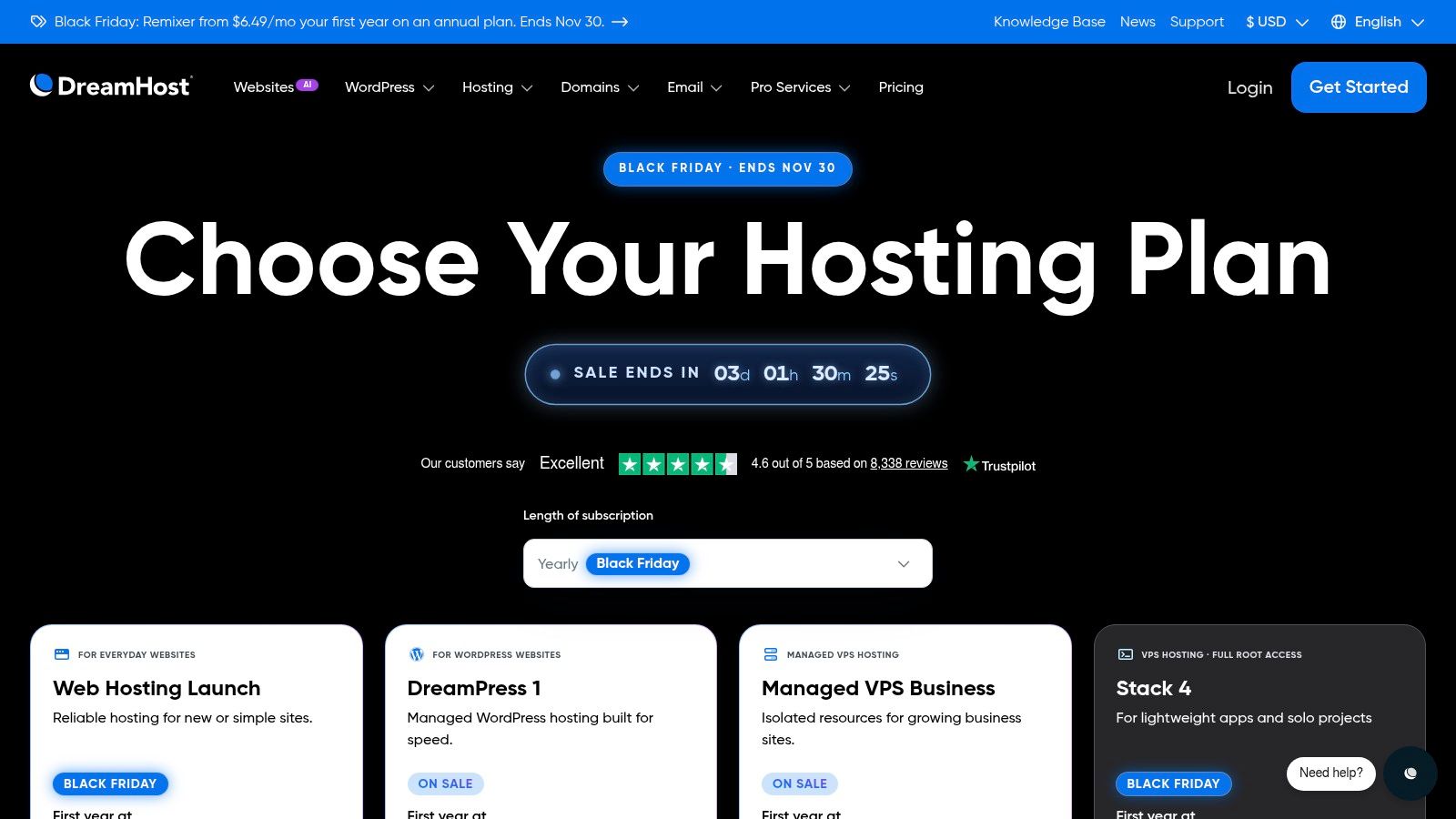
What does year two cost after the banner rate ends? The DreamHost hosting page, checked on 12 January 2026, lists Launch at $2.89 per month for the first year and $10.99 per month after. That renewal is almost four times the intro rate. Budget that figure, not the signup price.
Launch allows up to 25 websites, 25 GB of NVMe storage and unmetered bandwidth. Monthly billing is available at a different rate for a business that will not prepay a long term. The plan page also offers an AI website builder.
Count The Add-Ons, Not Just The Plan
The renewal jump is only part of the year two bill. Backups, restores and security features are often sold as paid add-ons. Confirm each add-on price on the provider's current pricing page before buying, because those charges sit on top of the $10.99 renewal.
- Backups: ask whether daily backups are included or sold as an extra, and whether a restore carries a fee.
- Email: business mailboxes usually become a separate subscription once any introductory period ends.
- Restores: a paid restore is the line item nobody budgets for until an incident arrives.
Twenty-five sites on one shared plan fits several small properties. Storage is the tighter cap. Twenty-five gigabytes has to cover every site and its files, so a media-heavy property can hit the limit while site slots remain unused.
5. InMotion Hosting
InMotion's Launch plan bundles what other hosts charge for: 100 GB of NVMe storage, two websites, unlimited email addresses, free SSL, free website migration and a domain credit on qualifying terms, priced at $3.49 per month on a three-year term and $13.99 per month on renewal on the InMotion shared hosting page checked on 12 January 2026. Shorter terms cost more per month.
The Traffic Question Nobody Tests
A survey of 225 small-business leaders found that 52% experienced performance degradation at or below 1,000 visitors, 35% had experienced a traffic-related crash or slowdown, and only 47% monitored both website speed and uptime (Liquid Web's SMB hosting study). A thousand visitors is a modest month for a local service business with a working ad budget.
Two sites on one plan suits a main site plus a campaign page. Migration help matters more than the storage figure when an existing site is moving, because a botched move costs trading days, not disk space. Ask what the migration covers: files, databases, mailboxes and DNS, or only the public files.
Test the plan before a promotion, not during one. Push a few hundred concurrent requests at a staging copy and watch error rates and recovery time.
That test tells a buyer more than any bandwidth claim printed on the page.
6. GreenGeeks
GreenGeeks sells shared hosting in tiers and prints the specifications, which makes the base tier easy to judge on paper. Lite lists 25 GB of storage, one hosted domain, up to 50 email accounts, free SSL, a free first-year domain and free CDN support on the GreenGeeks hosting page checked on 12 January 2026. Higher tiers add storage and hosted domains.
The one-domain cap on Lite is the practical limit. A business running a main site plus a booking subdomain or a second brand needs the next tier up, and that changes the comparison entirely. Fifty email accounts sounds generous, but they share the plan's storage with the website itself, so a busy mailbox eats into the same 25 GB the site files occupy. The year two calculation here depends on which tier the domain count forces, not on which banner price caught the eye.
Security Is No Longer A Premium Line
Budget buyers increasingly treat protection as part of the product rather than an upgrade. Recent small-business survey evidence shows 47% of SMBs updated their cybersecurity solutions to provide additional protection (Shopify's hosting roundup).
That shift raises the bar for what an entry tier should include, and it gives buyers a concrete set of questions to put to any host before paying.
A backup claim without a retention period is marketing. Ask how many days are kept, where the copies sit, and whether you can download one yourself.
- Retention: how many days of backups does the host keep? A short window covers a mistake made this week and nothing older.
- Restore process: a self-service button beats a support ticket queue at two in the morning.
- Account isolation: on shared hardware, ask how neighbouring accounts are separated.
The answers matter more than the feature list. A host that publishes retention terms in writing gives a buyer something to hold it to, and one that buries them behind a sales question is telling you how the relationship will work after the invoice is paid.
7. Bluehost
Bluehost's Starter plan quotes the term and the renewal in the same breath. It lists at $3.99 per month on a 36-month term and renews at $9.99 per month on that term, with 10 websites, 10 GB of NVMe storage, a free CDN, managed WordPress updates and a free first-year domain on listed plans, per the Bluehost shared hosting page checked on 12 January 2026.
What The Base Tier Leaves Out
Ten sites on 10 GB is a split worth understanding before signing. Ten small brochure sites fit comfortably. One site with a photo library or a product catalogue will not. The site count is generous and the storage is not, which is the reverse of how most entry tiers are built.
Support is the other subtraction. Phone support isn't included in Starter, so a business without a technical owner should plan on chat and tickets. Email storage is limited on the same tier, which pushes mailboxes toward a separate provider and adds a subscription the banner price never mentions.
The beginner tools do reduce setup work. AI site creation and managed WordPress updates mean a solo founder can have a working site the same afternoon. 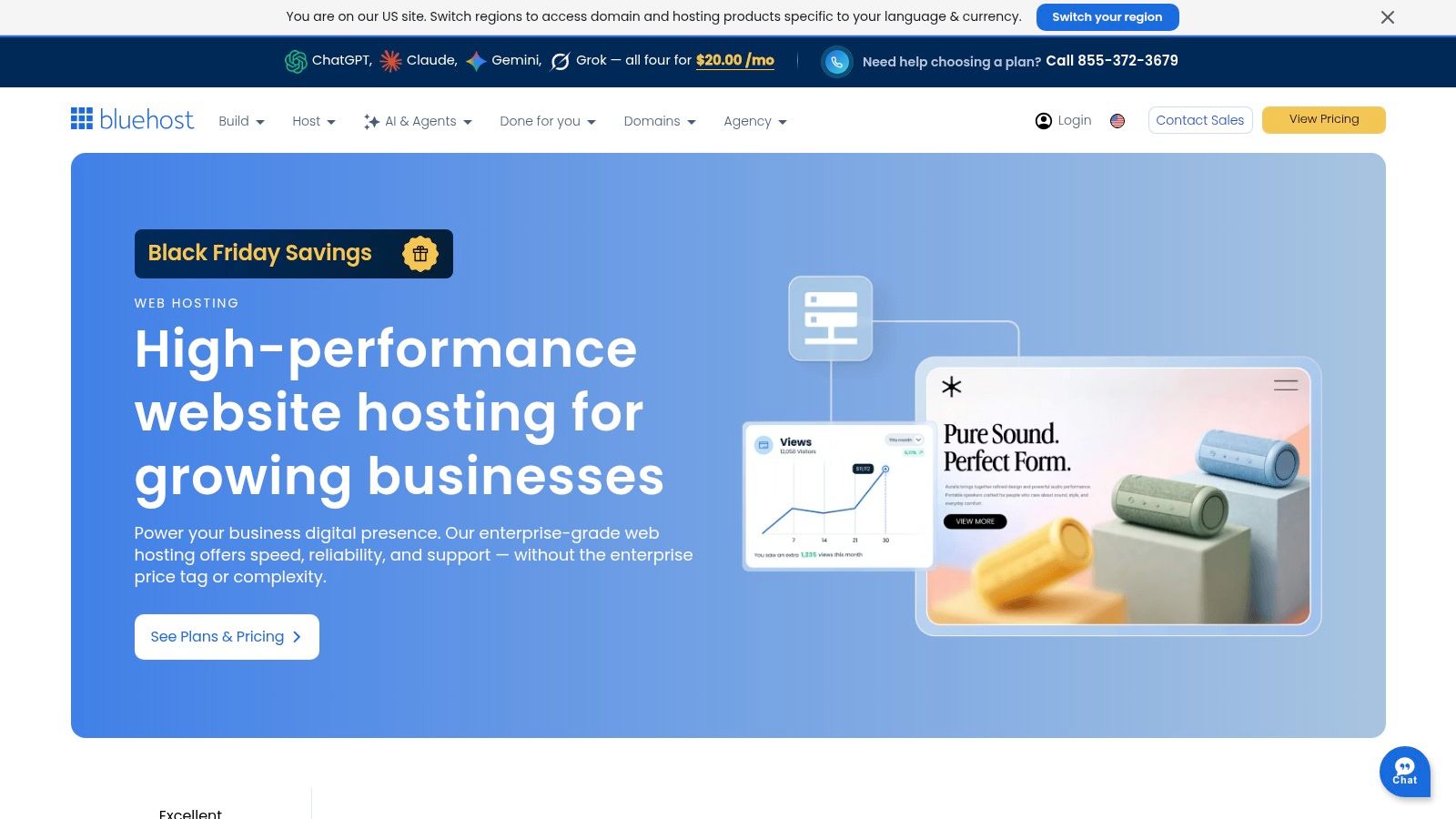
The 36-month commitment is what buys the rate, and the money leaves the account in one payment.
8. HostGator
HostGator's Hatchling is a single-site plan with the launch essentials attached: one-click WordPress installation, free SSL, a free domain, website transfer and unmetered bandwidth. The introductory rate is shown from $2.75 per month, while the provider's own price chart lists regular pricing equivalent to $10.99 per month on a three-year term, per the HostGator web hosting page checked on 12 January 2026.
The Free Domain Has Terms Of Its Own
A bundled domain is convenient and it isn't free forever. For .com, .net and .org registrations, ICANN's registrar advisory describes an Auto-Renew Grace Period following automatic renewal, and gives registrars a credit equal to the US$6.00 auto-renewal fee when a registration transfers away within 45 days of that automatic renewal (ICANN registrar advisory on the auto-renew grace period).
That matters when domain and hosting are tied together. Automatic renewal, transfer timing and the displayed renewal price all affect what it costs to move later. Check two things before paying: that the bundled domain is registered in the business's own name, and that the business holds the registrar login rather than the host.
Hatchling's single-site limit is deliberate. Baby and Business tiers add site capacity, so an upgrade path exists before a second site does.
9. SiteGround
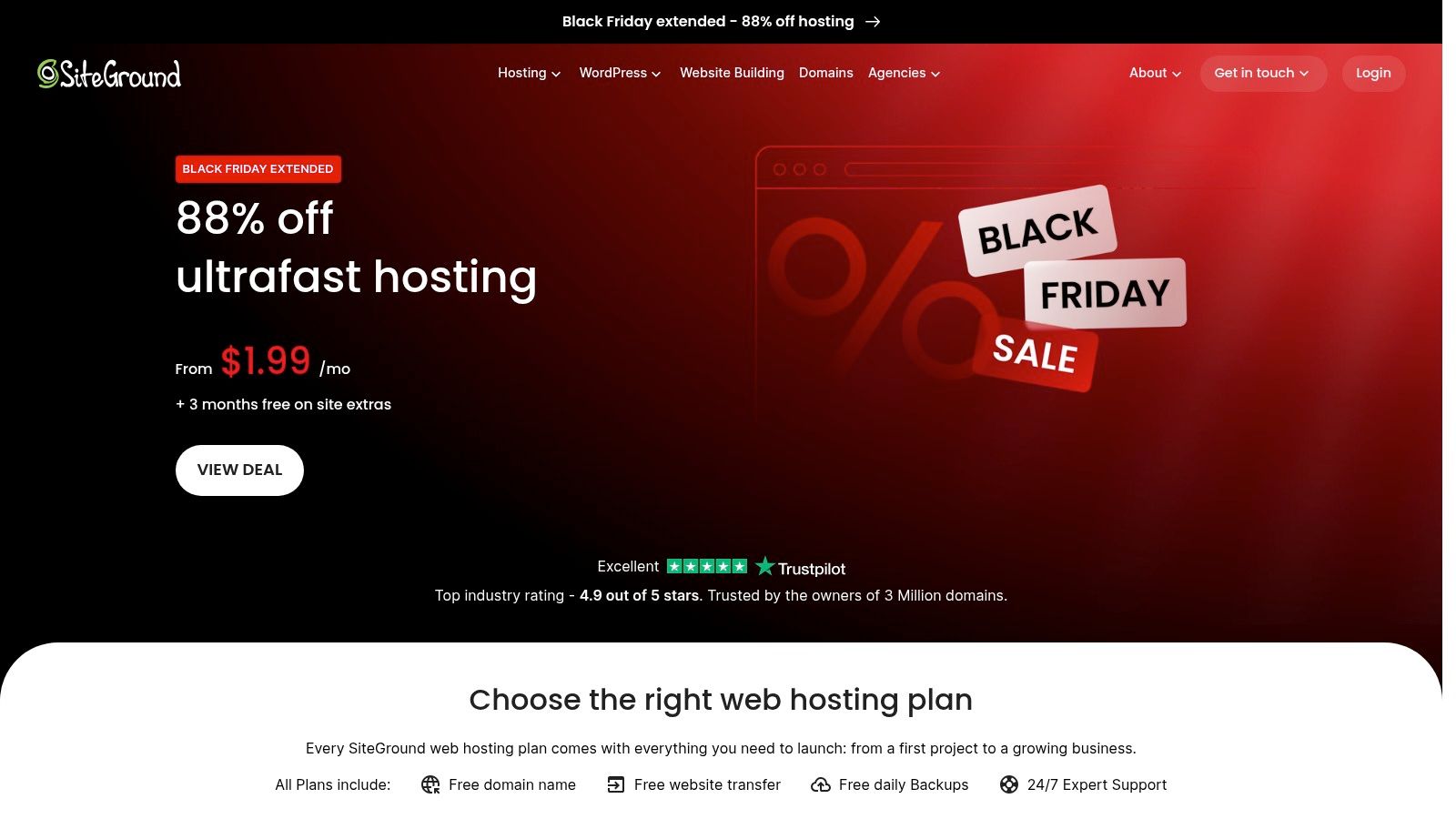
SiteGround sells WordPress-focused hosting with managed tooling and a clean progression of tiers, and the plan a growing business needs is rarely the cheapest one on the page. The entry tier suits a launch. The tiers above it are where the staging, caching and support features live, so the year two bill depends on which tier the site will occupy by then.
Compare The Tier You'll Actually Buy
Price the tier the site will need in month thirteen, not the tier that fits a five-page launch.
- Website limits: count every domain, subdomain and staging copy before choosing, since a WordPress site under active development can occupy several of those slots at once.
- Storage: check whether the allowance covers mail, backups and staging copies or only the public files, because a managed WordPress install generates all three.
- Backup terms: retention length and restore cost vary by tier, and the jump between tiers on a managed host is often a backup policy rather than a speed gain.
- Renewal price: compare the renewal column across two tiers, since the tier that looks like a small upgrade at sign-up can be a larger one at renewal.
Managed features earn their premium in a specific case: a WordPress business site with plugins that need updating, a shop that needs caching configured, or an owner with no appetite for server administration. On those plans the support and tooling are the product, and the renewal rate is the price of not hiring an administrator.
For a five-page brochure site with two plugins, that premium buys very little. The performance and management features start to matter once traffic and plugin count rise together, which is why the right comparison is the higher tier's renewal rate against the cost of the administrator's hours it replaces.
10. GoDaddy
GoDaddy's advantage is consolidation. Domains, hosting and website products sit in one account, which suits a business that already renews a domain there and doesn't want a second login. Economy has been positioned as a single-site entry option on the GoDaddy web hosting page checked on 12 January 2026.
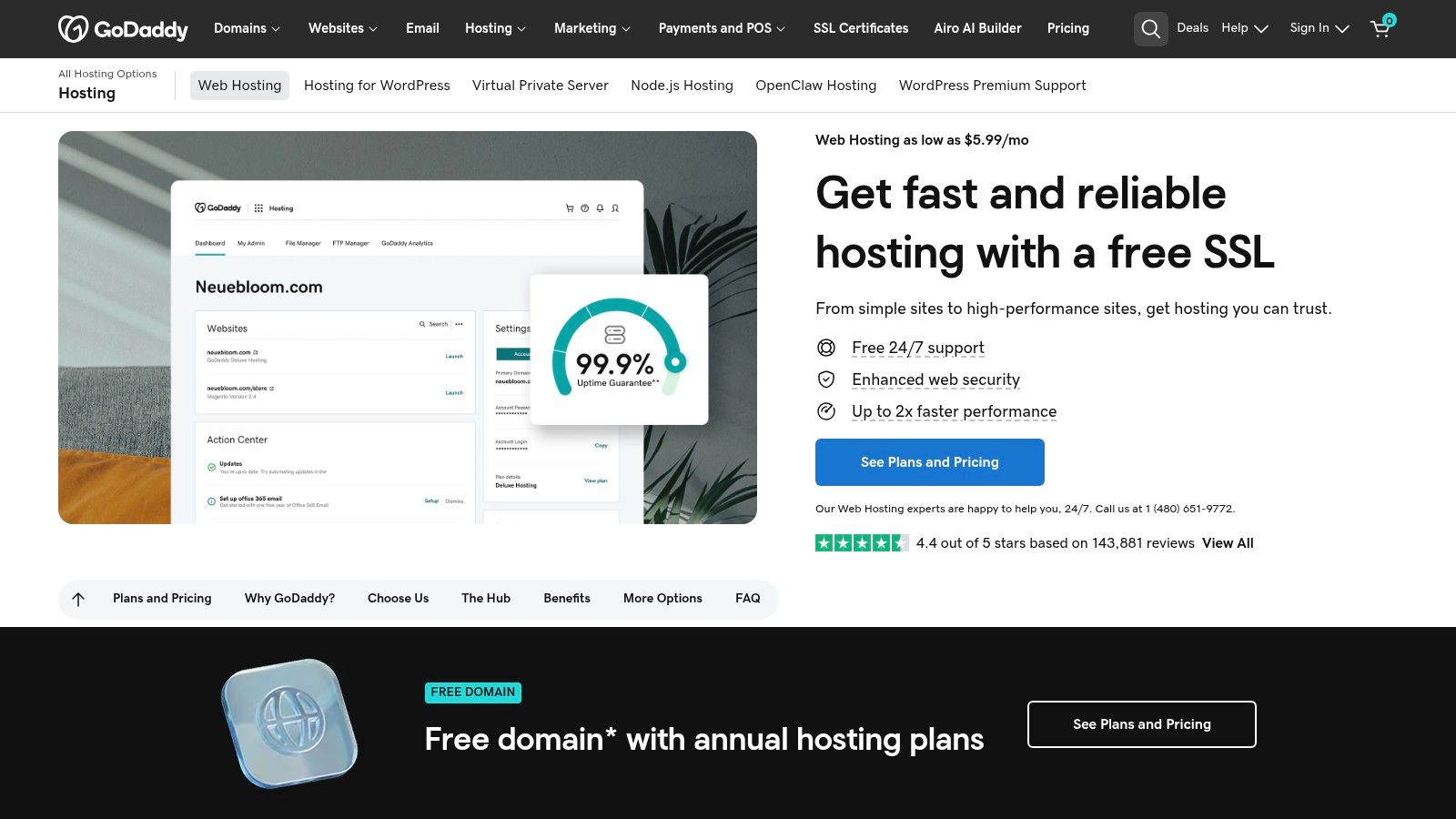
The cost of that convenience is comparison. Bundles and optional add-ons make a like-for-like price harder to build, and email, backups and renewal pricing need checking line by line at checkout rather than on the banner.
Moving Later Is Governed By Rules, Not By The Host
ICANN transfer rules restrict domain moves during the first 60 days after initial registration and during the first 60 days after a previous transfer, and a transfer under the applicable policy generally extends the registration term by one year, subject to a maximum total registration term of 10 years (ICANN transfer policy appendix).
Those rules set the earliest date a business can leave, whatever the hosting contract says. Website migration and domain transfer are separate jobs on separate clocks, and a host that handles one well may still leave the other to you.
ReportDoor's ranking of the best cheap website builders covers the build side of the same decision.
Introductory price, renewal rate and plan limits side by side
The renewal bill is the stronger comparison point, but contract length determines when that bill arrives. A first-year promotion and a longer prepaid offer expose the business to different payment schedules. The same monthly headline can therefore represent a different commitment.
Resource allowances also change the comparison. Multiple-site hosting can suit a business running several small websites, while a single-site tier may be sufficient for a brochure site. Storage and site allowances need to be considered together.
| Host | Price and term structure | Resource emphasis | Best fit |
|---|---|---|---|
| Hostinger | Lowest advertised rates may require a long subscription; renewal can be substantially higher | Higher tiers support multiple sites | Businesses seeking guided setup and room to upgrade |
| Namecheap | Entry pricing rises at renewal | Basic hosting for business and brochure sites | Businesses prioritizing a low starting cost |
| IONOS | Featured introductory offer lasts a year, then renews at a higher rate | NVMe storage alongside bundled services | Businesses consolidating hosting, domain, email and security |
| DreamHost | First-year promotional pricing; monthly billing is available at a different rate | Multiple sites and NVMe storage | Businesses balancing several small sites with billing flexibility |
| InMotion Hosting | Lowest listed price requires a multiyear commitment; renewal is higher | Multiple-site allowance and NVMe storage | Small businesses needing migration help and included email |
| GreenGeeks | Promotional discounts depend on subscription length | Lite targets a single site with capped storage | Sustainability-minded businesses with a small website |
| Bluehost | Promotional pricing requires a multiyear term; renewal is higher | Multiple-site allowance with capped NVMe storage | Beginners launching WordPress sites |
| HostGator | Introductory pricing differs from the regular multiyear rate | Single-site hosting with unmetered bandwidth | A business launching its first website |
| SiteGround | Compare the selected tier's introductory and renewal charges together | WordPress management tools | Businesses prioritizing managed WordPress features |
| GoDaddy | Compare the hosting charge with optional bundle additions | Economy targets a single site | Businesses already managing domains with GoDaddy |
The practical distinction is between paying for capacity and paying for convenience. A larger site allowance has little value to a single-site business. Included email or migration help may matter more when those services would otherwise require separate arrangements. A low introductory rate deserves less weight when renewal changes the ongoing cost.
How to Read a Hosting Quote Before You Pay
Four figures decide whether a cheap plan stays cheap. None of them is the number in the banner.
The Full Contract Cost
Multiply the monthly rate by the term. A rate of a few dollars a month on a 36-month term is a single payment of a hundred-plus dollars, not a bill you can stop. Add any setup fee, the domain if it isn't bundled beyond year one, and SSL if the certificate isn't included in the plan.
That total is the first bill. Compare it across providers before comparing anything else, because two hosts advertising the same monthly rate can differ by a wide margin once the term length enters the arithmetic.
The Renewal Rate From The Vendor's Page
Take the renewal figure from the provider's own price page on the day you buy, not from a review written last year. Where a host publishes both numbers side by side, the year two bill is arithmetic: multiply the renewal rate by twelve and compare it against what you paid for year one. Where it doesn't, assume the renewal is materially higher and ask support to confirm it in writing.
The gap matters more than the headline. A plan that doubles at renewal costs more across two years than a plan with a higher introductory rate and a modest step up.
The Caps On The Base Tier
Map sites and storage to the plan the business has. A company with a main site, a booking page and a staging copy needs three site slots before it needs a single extra gigabyte. A portfolio business needs storage first. Most small sites use very little disk and fail on concurrency instead.
Check what the base tier leaves out. Some entry plans exclude a free domain, daily backups or more than one email account, and each missing item carries its own price once you add it back.
Email, Backups And Migration
Confirm three things in writing: whether mailboxes are included or billed separately, how long backups are retained and what a restore costs, and what the migration covers. Free migration that moves files but not databases isn't migration.
Practical rule: price the plan at renewal, with the features you'll genuinely use, and compare that number across three providers before signing anything.
Test The Server, Not The Spec Sheet
Server response time is measurable before committing. Google's Lighthouse documentation uses 600 milliseconds as its stricter server-response-time limit and identifies 800 milliseconds as the recommended Core Web Vitals threshold for time to first byte (Chrome Lighthouse guidance on server response time). Install the intended CMS and theme, then measure from the market you sell to.
A slow server on a cheap plan is still a slow server. No renewal discount compensates for visitors leaving before the page loads.
Prices and plan terms change, so re-check every quoted figure at checkout. The host that survives this process is rarely the one with the loudest banner.
ReportDoor's comparison reports check seller prices on a stated date, record plan limits, and leave out options that fail the stated requirement. Buyers who want to re-run the year two arithmetic themselves can browse the published reports and sourced statistics at ReportDoor.
Cite this page
ReportDoor. (2026, November 28). Cheap Web Hosting for Small Business: 10 Plans That Last. https://reportdoor.com/cheap-web-hosting-for-small-business
Spotted an error in this guide? Email editorial@reportdoor.com
Keep reading
- MoneyAnnuities Explained: Types, Fees, Surrender Charges and When One Makes SenseAn annuity trades a lump sum for income from an insurer. Fees near 1.25% a year and surrender periods of 6 to 10 years decide whether one fits your retirement.November 27, 2026 · 10 min read
- MoneyBlockchain Explained: What a Block Is, What the Chain Is and How Crypto Uses ThemA blockchain is a shared ledger where each block stores the hash of the one before it, so edits are easy to spot. Bitcoin adds a block about every 10 minutes.November 27, 2026 · 10 min read
- TravelDating Abroad: How to Stay Safe While Looking for LoveNever send money to someone you have not met, meet in public and arrange your own ride. The FBI logged $929 million in romance fraud losses in 2025.November 27, 2026 · 8 min read